In catering delivery for restaurants, the gap between a first order and a second is where most restaurants lose repeat clients without knowing why.
A restaurant’s first catering order faces zero margin for error. The client remembers that order because there is no history yet to absorb a mistake. What determines whether a second order follows is less dramatic than most operators expect. It usually comes down to whether the second delivery looks like the first one, not whether the first one was flawless.
TL;DR: In catering delivery for restaurants, the first delivery sets an impression, but a second order depends on whether that impression holds up the next time. Both sides agree on setup preferences before the first delivery. The driver follows them on every order, and the team checks the setup against a photo record. That does not guarantee the client reorders. Building consistency into the process rather than leaving it to memory is what keeps the experience steady from one order to the next.
Why the second catering order is the real test
There is a gap between the first catering order and the second that most restaurants do not manage deliberately. The first order gets attention because it is new. Someone double-checks the ticket, confirms the address, maybe calls the client directly.
The second order, if it comes, often lands with whoever is on shift that day. Whoever handles it may give it less scrutiny, because the account already “worked” once. That shift from careful to routine is where inconsistency creeps in. Inconsistency is what a client notices even when nothing technically goes wrong.
Building consistency into catering delivery for restaurants
The fix is not more attention on every order forever. It is making sure the things that mattered on the first delivery do not depend on someone remembering them for the second.
What the process covers
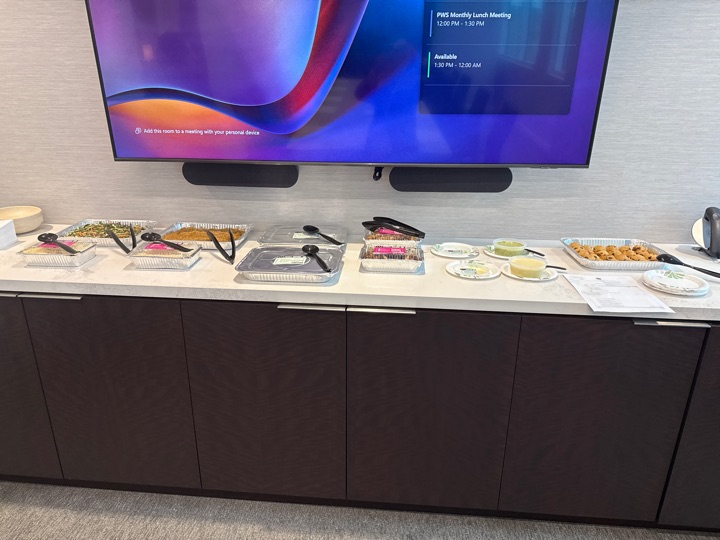
The restaurant and our team set each account’s setup preferences before the first delivery goes out: how to arrange the food, where it goes at the destination, what the client expects to see when they open the door. The driver follows those preferences on every order after that, not just the first one.
A photo captures the setup on every delivery, so there is a record to check rather than a guess about whether it matched. Our dispatch team reviews that record and follows up with the driver when something looks off. A brand-new account gets the same scrutiny as one with years of history behind it. That process sits inside a broader track record: more than 3.5 million deliveries since 2014, at a 98% on-time rate.
What the process does not cover
That process answers a specific, narrow question: did this delivery match what the client expected? It does not answer the larger question of whether the client reorders.
Plenty of things outside the delivery decide that. Budget cycles change. The person who placed the order moves to a different role. A company switches vendors for reasons that have nothing to do with how the food arrived. A consistent process cannot offset any of that. Claiming it could would be dishonest to any operator who has actually run a catering program.
What a consistent process does is remove the reasons a client would say no that are entirely within the restaurant’s control. If the first delivery looked a certain way and the second looks different because a different driver handled it, or because the instructions lived in one person’s head instead of a shared record, that is an avoidable inconsistency. The client notices it and files it away, even if they never send a complaint.
Keeping it consistent across locations
For restaurants running catering across more than one location, a client who orders from one location and then books a second event through another location of the same restaurant has no reason to expect a different experience. When the team shares setup preferences across locations and follows them the same way regardless of which driver takes the order, the second order is less likely to feel like a different vendor took over.
Why the photo record matters
The photo record turns “I think the setup was right” into something someone can actually check. That helps the restaurant internally. A manager reviewing accounts does not have to take a driver’s word for how a delivery went.
It also means the team does not treat a new account more loosely than an established one just because there is less history to go on. The standard holds the same either way.
None of this replaces the parts of the relationship that happen outside of delivery: the account manager who checks in, the accurate invoice, the sales conversation that led to the order. What it does is make sure delivery is not the reason a second order fails to happen.
A client who had a good first experience and then a slightly different one the second time is not thinking about process. They are thinking that something changed. They usually do not ask why before they stop ordering.
Where to start
A restaurant reviewing its catering delivery process can start with a simple check: has anyone written down setup preferences anywhere that is not a single person’s memory? Is there any record of what actually happened at the destination on each delivery? If the answer to either is no, that is the gap worth closing before worrying about anything else in the catering program.
Weknock handles catering delivery for restaurants as their delivery partner, with a trained driver handling each order and setup preferences followed every time.
Restaurants that want to see how that process works in practice can explore catering delivery.
Restaurants ready to talk about bringing Weknock on as their delivery partner can get in touch here.
FAQ
What should a restaurant document before a client’s first catering delivery?
At minimum: how to arrange the food at the destination, where to place it, any special handling instructions, and who to contact if something is unclear on site. Writing this down before the first delivery means the second one does not depend on someone remembering how the first went.
Does a good first catering delivery guarantee a second order?
No. A smooth first delivery removes one reason a client might not reorder. But budget changes, staffing shifts, and business needs on the client’s side all affect whether a second order comes in. A consistent process supports the experience. It does not control the outcome.
How do multi-location restaurants keep catering delivery consistent across locations?
By turning setup preferences into a shared record rather than something each location or each driver handles differently. A restaurant working with Weknock sets those preferences once. They apply to every order and every driver, regardless of which location the order came from.
What happens if a delivery photo shows something did not go as planned?
Weknock’s dispatch team reviews the setup record and follows up with the driver to address the issue going forward. The photo creates a record to check against, rather than relying on a client complaint to find out something went off.