Gig drivers for catering orders are the hidden risk most restaurants discover only after an account goes quiet. A restaurant recently switched to us after paying a premium, for months, specifically so it would not get gig drivers on its catering orders. It got them anyway, more than once, and no one gave any notice.
That is the problem with marketplace and gig delivery. The restaurant does not control who shows up. Weknock, a B2B catering delivery logistics company serving Florida restaurants since 2014, was built on the opposite: one trained driver per order, with no gig-driver rollover.
TL;DR: Marketplace and gig catering delivery runs on drivers who accept orders, not drivers who are assigned to them. When no one accepts, or the service cannot staff the order, it rolls over to an on-demand gig driver who does not know catering and does not know your account. You paid for a professional. You got whoever was nearby. The cost shows up later, when the account goes quiet.
What “you do not control the driver” actually means
On paper, a managed catering delivery service sounds like a fleet. In practice, it is usually a network of independent contractors who choose which orders to take.
The order is offered, not assigned. A driver in the area can accept it or pass. If enough drivers pass, or none are working that window, the order has a gap that someone has to fill fast.
That gap is the part restaurants do not see when they sign the contract. The service still has to deliver the order. So it reaches for whatever network can cover it on short notice.
How catering orders roll over to gig drivers for catering jobs
Here is the mechanic the restaurant rarely gets told about.
When a managed service cannot staff a catering order from its own driver pool, it backfills from an on-demand gig network. These are the same large platforms that deliver single dinners, now carrying a 40-person catering order.
The national platforms market a “premium” gig tier for catering. The bar is a few hundred lifetime deliveries and a decent rating. That is not a catering professional. That is a well-reviewed gig driver who may have never set up a buffet.
The rollover happens quietly. The restaurant placed the order with a catering service and assumed a catering driver was coming. The substitution happens on the back end, and the first sign of it is often the driver who walks in.
That was the recently switched restaurant’s experience. They paid more to avoid gig drivers. When the service could not cover the delivery, a gig driver showed up anyway, with no notice, because the alternative was no delivery at all.
What the gig driver does not know
A catering delivery is not a bigger version of a dinner drop. It is a different job, and the gaps show immediately when the wrong person is doing it.
The gig driver does not know the building. They do not know which entrance the loading dock is, where the meeting room is, or that the security desk needs a name before noon. They were routed to an address, not briefed on an event.
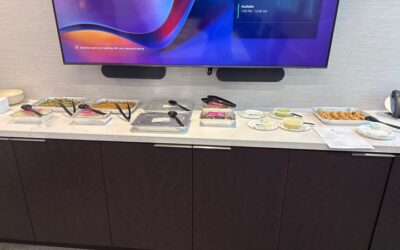
They also do not know the setup. Catering clients expect the food arranged, the chafing dishes lit, the layout matching the order. A driver trained on single deliveries leaves it at the desk, because that is the entire job they were trained for.
And they do not know the account. To the gig driver, this is one more stop in an afternoon. To the restaurant, it is a corporate client worth tens of thousands of dollars a year. The driver carrying that relationship has no idea it exists.
Why “premium gig” is still gig
The marketplace answer to this is a premium fleet and a higher fee. It does not fix the structural problem.
The driver is still selected by who is available, not by who knows your account. The order is still offered, not owned. And when the premium fleet cannot cover it either, the order still rolls down to whoever can.
You are paying more to lower the odds of a bad outcome, not to remove it. The recently switched restaurant did exactly that, and still got the outcome they paid to avoid. A reduced chance of failure is not the same as control.
If your catering program is fighting this, our [Reliability Guide] lays out what a delivery process should guarantee, and where the rollover gaps usually hide.
What controlling the driver looks like
The fix is not a better gig driver. It is a model where the rollover cannot happen in the first place.
Weknock assigns one trained driver per catering order. The driver is not chosen by who accepts. There is no on-demand network behind the curtain that fills the gaps with strangers. When a catering order goes out, a known driver owns it from pickup through setup.
That is why the on-time rate holds at 98%, and it is not luck. Every catering order goes to a known driver, never auctioned off to whoever happens to be nearby. It is the result of removing the part of the process where the restaurant loses control.
When something does shift, dispatch answers in minutes, and the restaurant hears it from us before the client feels it. There is no silent substitution, because there is no substitute to make.
The cost the contract does not show
A premium delivery fee is a number the restaurant can see. The real cost of losing driver control is the one that does not appear on the invoice.
It is the corporate account that stops ordering after a gig driver left the food at the lobby desk. It is the recurring client, worth far more than any single delivery, who quietly moves on. The fee saved a little. The account lost cost everything that account would have ordered next.
Controlling who shows up is not a luxury in catering. It is the difference between keeping an account and explaining to it why a stranger delivered its lunch.
If you want catering delivery where you always know who is showing up, [talk to our team].
Why did a gig driver show up for my catering order?
Most managed catering delivery services run on independent drivers who accept offered orders rather than being assigned to them. When no contracted driver is available, the service backfills the order from an on-demand gig network to avoid a missed delivery. The substitution usually happens on the back end, so the restaurant finds out only when the gig driver arrives.
What is the difference between gig delivery and a dedicated catering driver?
A gig driver is selected by availability and is measured on volume, often carrying several orders with no catering training. A dedicated catering driver is assigned to one order and trained on setup, building access, and client handoff. The dedicated model removes the rollover, so the restaurant always knows who is delivering and that the driver understands catering.
Do catering delivery services use on-demand gig drivers?
Many do, as a backup. When a managed service cannot staff an order from its own driver pool, it commonly fulfills the delivery through a national on-demand platform. Some platforms offer a “premium” gig tier for catering, but the driver is still chosen by availability, not by knowledge of the restaurant or the account.
How does Weknock make sure the right driver shows up?
Weknock assigns one trained driver per catering order, with no route stacking and no gig-driver rollover. The driver is known before the order goes out and owns it from pickup through setup. Across more than 3.5 million deliveries since 2014, that model holds a 98% on-time rate for more than 180 Florida restaurants.